EB-1A PETITION APPROVAL RATES PLUNGE TO JUST 32% IN 2026!
Published October 23, 2026
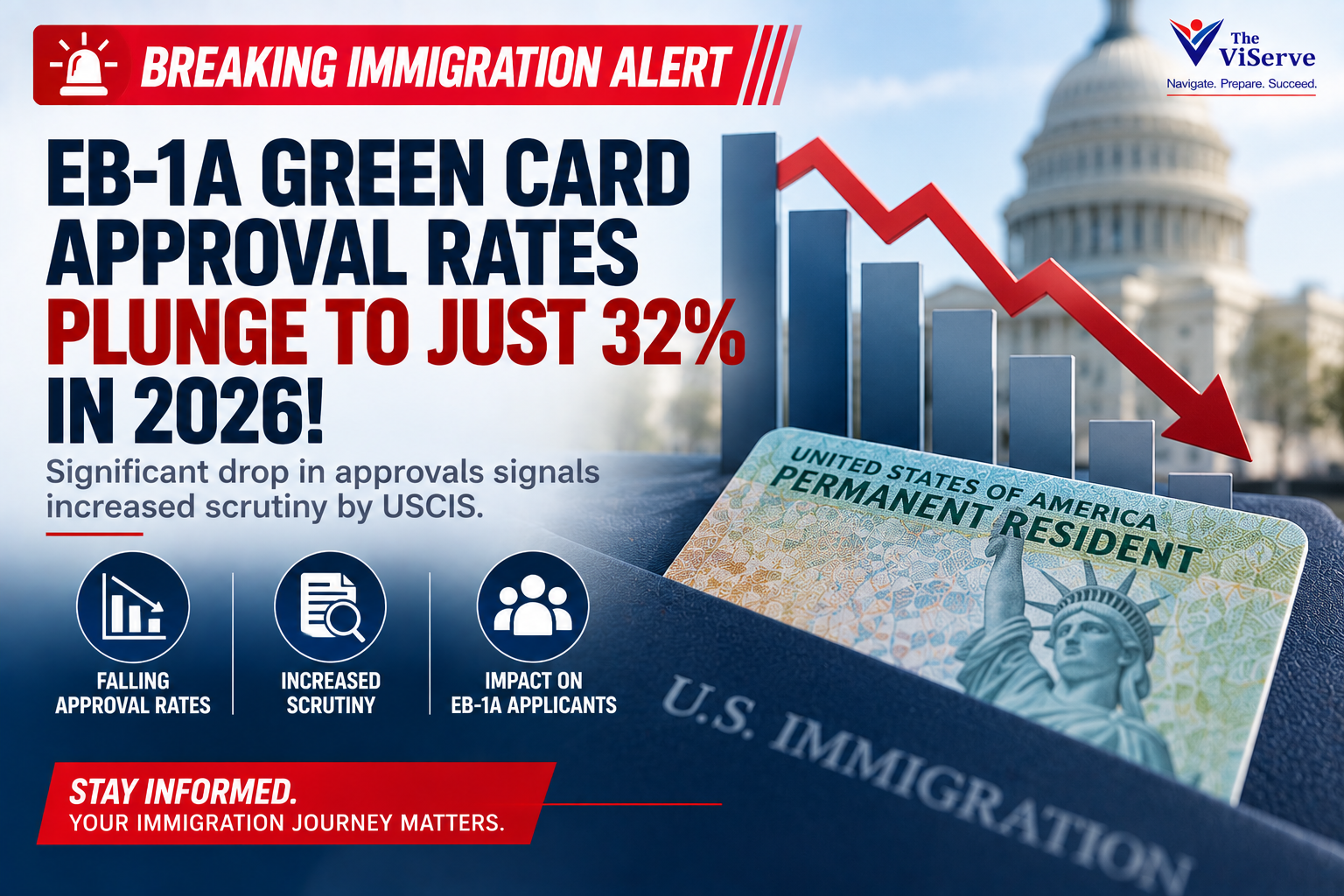
USCIS Approval Rates Fall Sharply — Applicants Face Increasing Scrutiny and Tougher Adjudication!
A recent immigration analysis published on October 16, 2026, reports a dramatic decline in EB-1A (Extraordinary Ability) green card petition approval rates, raising serious concerns for professionals, researchers, entrepreneurs, and other highly accomplished individuals pursuing permanent residence in the United States.
According to the report's analysis of USCIS quarterly data, EB-1A approval rates have fallen significantly and that has not stopped.
EB-1A APPROVAL RATE TREND:
FY 2024: Approximately 74.4%
FY 2025: Approximately 66.9%
FY 2026 — Quarter 1: Approximately 47.5%
FY 2026 — Quarter 2: Approximately 41.7%
FY 2026 — Quarter 3: Approximately 32%
This represents a substantial decline from the previous fiscal year's reported approval rate. A huge number of applicants with great profiles have been receiving Requests for Additional Evidence (RFE) and Notices of Intent to Deny (NOID) leading to more denials in high volumes. Many immigration attorneys are concerned the approval rate may plunge even further bringing an applicant's chance of approval below 30% in Q4.
WHY ARE APPROVAL RATES FALLING?
The report identifies several important developments:
- Stricter final merits review: USCIS is reportedly applying greater scrutiny when determining whether applicants have demonstrated sustained national or international acclaim and recognition among the small percentage at the top of their field.
- Meeting three criteria is not enough: Satisfying at least three of the ten EB-1A regulatory criteria does not guarantee approval. Applicants must also satisfy the overall final merits determination.
- Greater emphasis on independent evidence: Recommendation letters alone may be insufficient. Objective documentation demonstrating awards, publications, original contributions, professional recognition, and measurable impact is increasingly important.
- Possible denial without an RFE: The report highlights USCIS policy allowing officers, in applicable circumstances, to deny petitions without first issuing a Request for Evidence or Notice of Intent to Deny.
- Weak petitions face greater risks: Generic recommendation letters, unsupported claims, and insufficient evidence of sustained recognition may expose applicants to denial.
WHAT THIS MEANS FOR EB-1A APPLICANTS
If you are preparing to file an EB-1A petition, the quality of your initial submission is more important than ever.
Applicants should:
- Ensure their petition satisfies the regulatory criteria and the final merits standard.
- Provide credible, independent, and verifiable evidence of professional achievements.
- Demonstrate the broader significance and measurable impact of their contributions.
- Establish sustained national or international recognition beyond their immediate employer or professional network.
- Carefully evaluate the strength of their case before filing.
IS EB-1A STILL WORTH PURSUING?
Absolutely. EB-1A remains an important immigration pathway for individuals with extraordinary ability.
Qualified applicants can still self-petition without employer sponsorship or PERM labor certification. However, the reported decline underscores the importance of preparing a compelling, well-documented petition.
HERE'S THE BOTTOM LINE:
EB-1A approval is becoming more challenging, and simply meeting three regulatory criteria does not guarantee success.
A strong petition must demonstrate not only professional accomplishments but also sustained recognition, significant contributions, and extraordinary standing in the applicant's field.
The ViServe Immigration Update: Navigate. Prepare. Succeed.
Disclaimer: This newsletter is for general informational purposes only and does not constitute legal advice. Reported approval rates are aggregate statistics and do not determine the outcome of an individual petition.